Building a Scalable Creative System
How I transformed an undefined e-commerce design process into a structured system for multi-brand creative production.Art Direction · Creative Systems · AI Workflows

At Razor Group, I built a scalable creative production system from the ground up, establishing the processes, structures and design standards used to produce Amazon content across multiple brands and SKUs.
As the team and production volume grew, I evolved the system with Figma templates, quality frameworks, Jira-based task management and AI-assisted workflows to make creative production faster, more consistent and easier to scale.
Project:
Creative Production SystemCompany
Razor GroupMy Role:
Art Direction · Creative Systems · AI Workflow · Team LeadershipTeam:
5+ Freelance DesignersScope:
25+ brands · Amazon listings & A+ Content
The Challenge
Building a repeatable creative process from scratch01 NO STANDARD PROCESS
No shared methodology for approaching new listings.
02 INCONSISTENT EXECUTION
Different products and designers required different approaches.
03 LIMITED SCALABILITY
A growing volume of products made manual production harder to manage.
When I joined Razor Group, there was no standardised process for producing Amazon listing content.
Each product required a combination of visual assets, but there was no shared methodology for deciding what to create, how to approach the design or how much time to allocate to each stage.
As production grew across multiple brands and products, this made the process difficult to scale while maintaining a consistent creative standard.
The challenge was to create a repeatable system that could scale quality, speed & consistency.
How do you turn a creative task into a repeatable production system?
01 — BUILDING THE SYSTEM
To make production repeatable, I documented the workflow from product research and competitor analysis to design, quality checks and delivery. I also established target timings for each stage, giving designers a shared process to follow.
Defining the structure, workflow and timings for every listing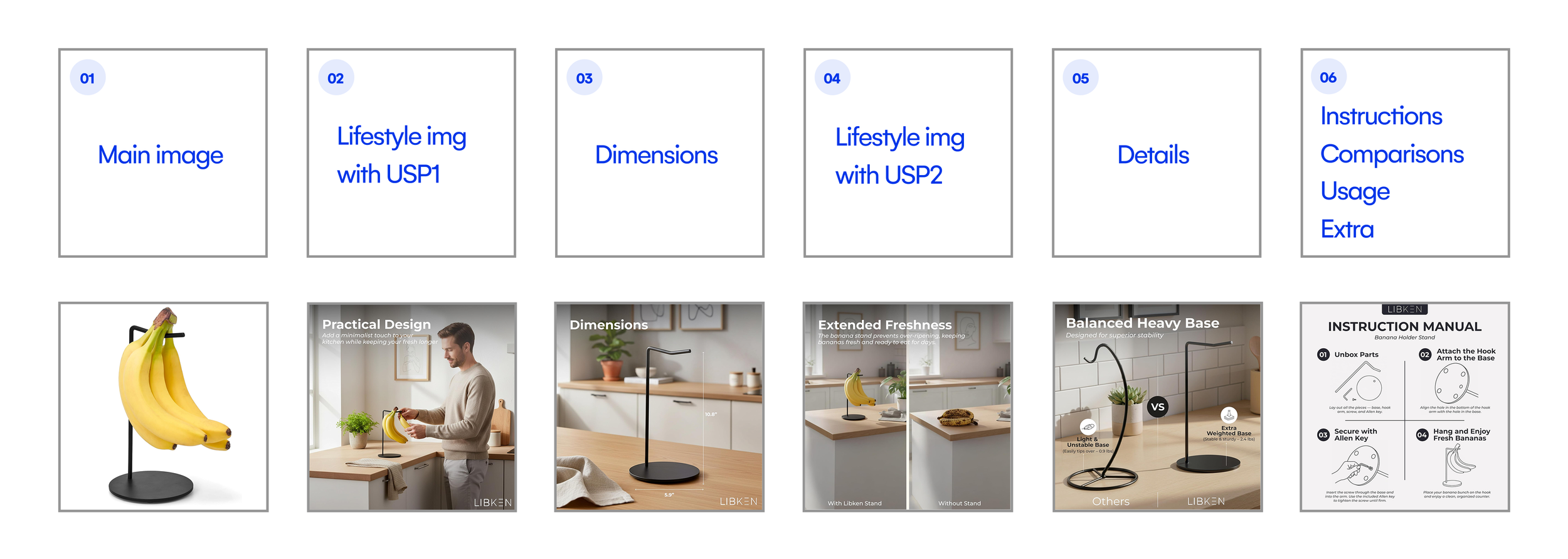
The goal wasn't to design one successful listing. It was to create a system that could reproduce quality at scale.
A repeatable listing architecture:
The first step was defining the core visual structure of each listing. Every asset had a specific role: presenting the product, showing it in context, explaining dimensions and communicating key benefits.
Standardising production: Making production predictable
I established target timings for each stage of listing production, giving designers a shared benchmark for planning and managing their work.
Research
Product and competitor analysis
Design
Main image and supporting assets
Copy & QA
Copy, final checks and asset preparation
02 — VALIDATING THE SYSTEM
Testing creative decisions. Measuring product performance.Creative decisions,
backed by performance.
We tested main-image variations on Amazon and tracked product performance before and after listing redesigns to evaluate the impact of the new creative approach.
Optimising the first thing shoppers see.
Two main-image treatments, tested on Amazon to understand how product presentation can influence performance in search.

Product-only presentation
The holder presented on its own against a clean white background.

Product shown in use
The holder shown with bananas to make its intended use immediately clear.
Main-image optimisation was a testable business decision, not just a visual preference.
Beyond the image test.
In nearly all our tests across different products, redesigning the product listing led to a 37% increase in sales. We also saw positive performance trends across many other updated products.
Historical before-and-after result; the original measurement period is no longer available.
Validated creative standards.
Ready to scale.
The testing and performance-tracking approach supported the decision to apply the methodology to new product launches.
The Solution
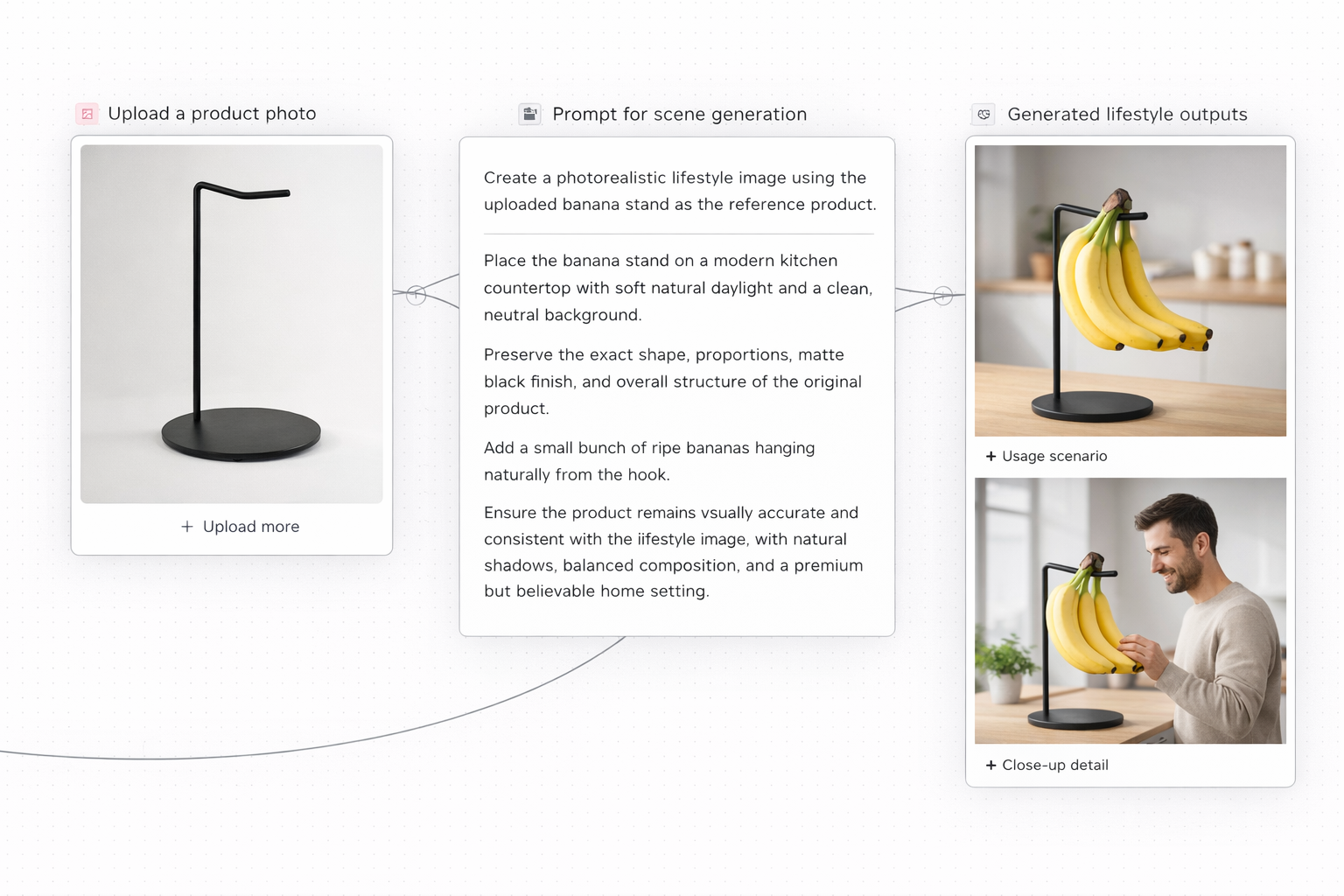
To address this challenge, I developed an AI-assisted creative production system combining structured prompts, design frameworks, and modular workflows. The goal was to shift listing creation from manual, time-intensive execution to a more efficient and repeatable process.
This approach enabled the fast and consistent production of Amazon listing visuals, reducing dependency on manual design work while maintaining conversion-ready quality across multiple products and brands.
By standardizing key steps in the process, it also allowed for faster iteration and greater scalability across the entire portfolio.

AI Creative Production PipelineInput → Output: ~ 30 – 60 Min. per SKUFrom raw product assets to conversion-ready visuals
System Design Decisions
To ensure scalability and consistency across brands, the system was structured around modular outputs and standardized prompts.
Separating generation, selection and refinement allowed for faster iteration cycles and reduced dependency on manual design execution.
This approach enabled a repeatable process adaptable across different product categories and visual styles.
Less time. Lower cost. More output.
By introducing an AI-assisted workflow, the listing production process evolved from manual execution to a structured, scalable system.
Production time was reduced from 4 hours to ~1 hour per listing, while maintaining consistent, conversion-ready output across multiple products SKUs and brands.
4h → ~1h
Production Time Reduction-75%
Production Cost Reduction3-5×
Faster Output IterationEach product is transformed into a structured set of Amazon-ready assets, including lifestyle visuals, feature highlights and conversion-driven messaging.
This system enables consistent quality at scale while significantly reducing production time and manual effort.
From Raw Assets to Conversion-Ready Output
Raw Product Asset →Conversion-Ready Listing System Output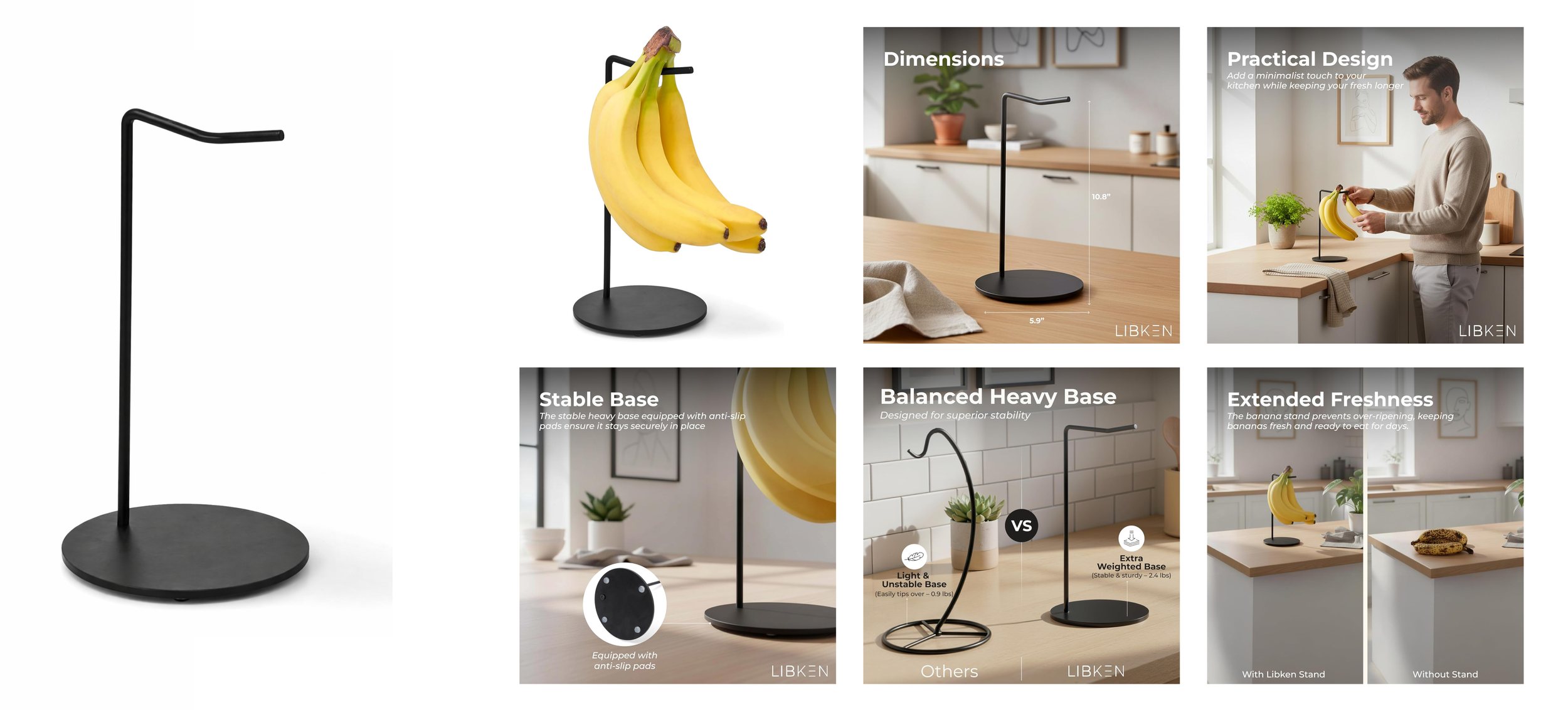
Impact
The introduction of this system reduces both production time and cost, improving overall operational efficiency.
By standardizing the creative process, it ensures consistent visual quality and messaging across listings, while minimizing dependency on manual design execution.
The workflow enables teams to produce high-quality assets faster and at scale, supporting more efficient content production in a multi-brand environment.
Results
The workflow enables the efficient production of complete Amazon listing assets starting from minimal product input.
By leveraging structured prompts and AI-driven image generation, multiple visual directions can be developed and refined quickly, resulting in consistent, conversion-ready outputs.
This approach significantly reduces production time and supports parallel asset creation across multiple products, making the process scalable across brands and product lines.
01 — BUILDING THE SYSTEM
To make production repeatable, I documented the workflow from product research and competitor analysis to design, quality checks and delivery. I also established target timings for each stage, giving designers a shared process to follow.
Defining the structure, workflow and timings for every listingDefining the standards behind every image:
I translated the listing structure into practical creative guidelines. Each asset had a defined purpose and clear principles for product presentation, lifestyle context and information hierarchy. The goal was to make creative decisions more consistent while adapting the visuals to each product.
01
MAIN IMAGES
Make the product stand out
I established principles for presenting each product clearly and prominently, considering composition, product visibility and relevant details to strengthen its presentation while respecting marketplace requirements.
02
LIFESTYLE IMAGERY
Show the product in context
Guidelines for presenting products in realistic scenarios, helping customers understand their use and key benefits.
03
PRODUCT INFORMATION
Key details easy to understand
Standardised approaches to communicating dimensions, features, benefits and other product-specific information.
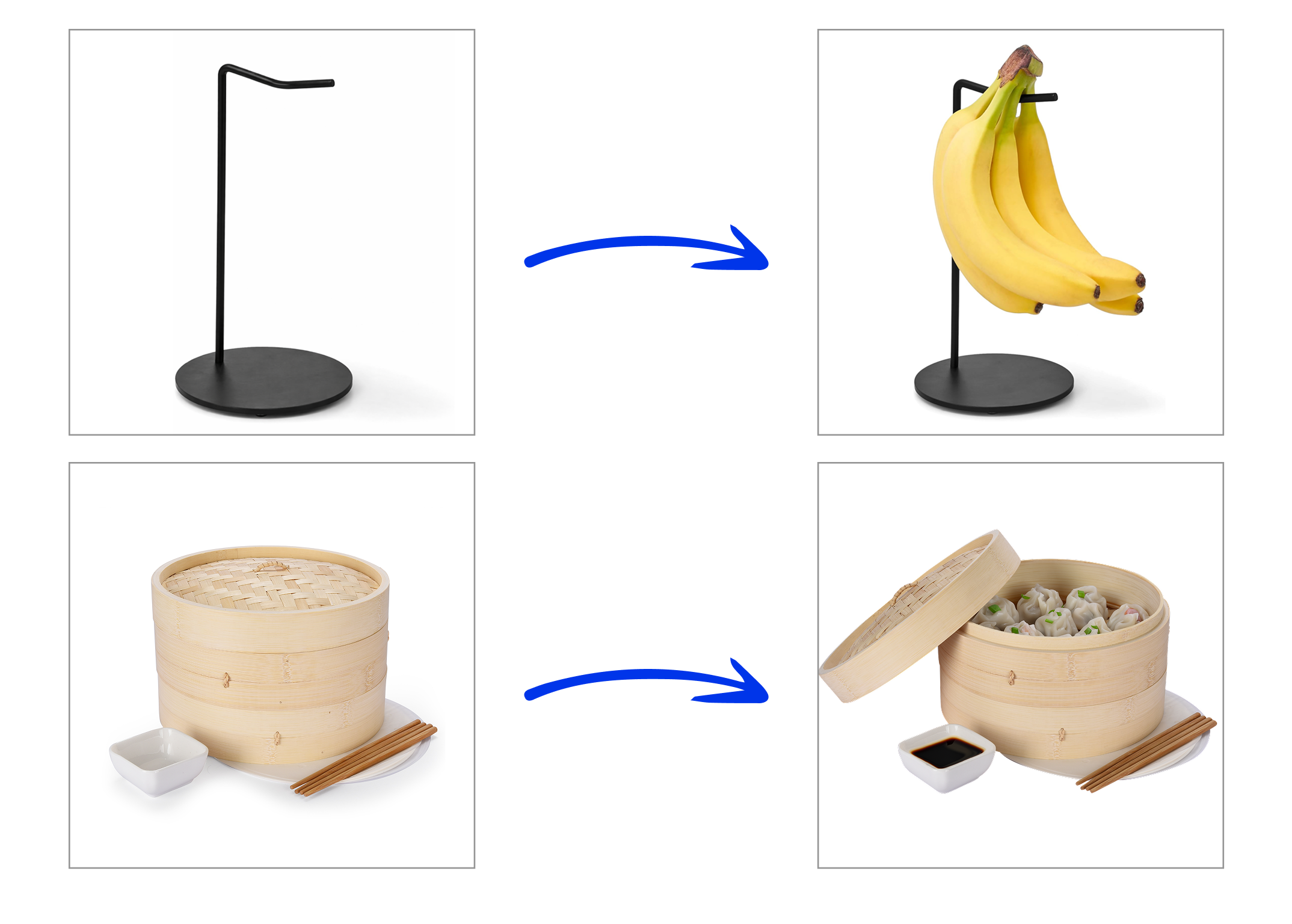

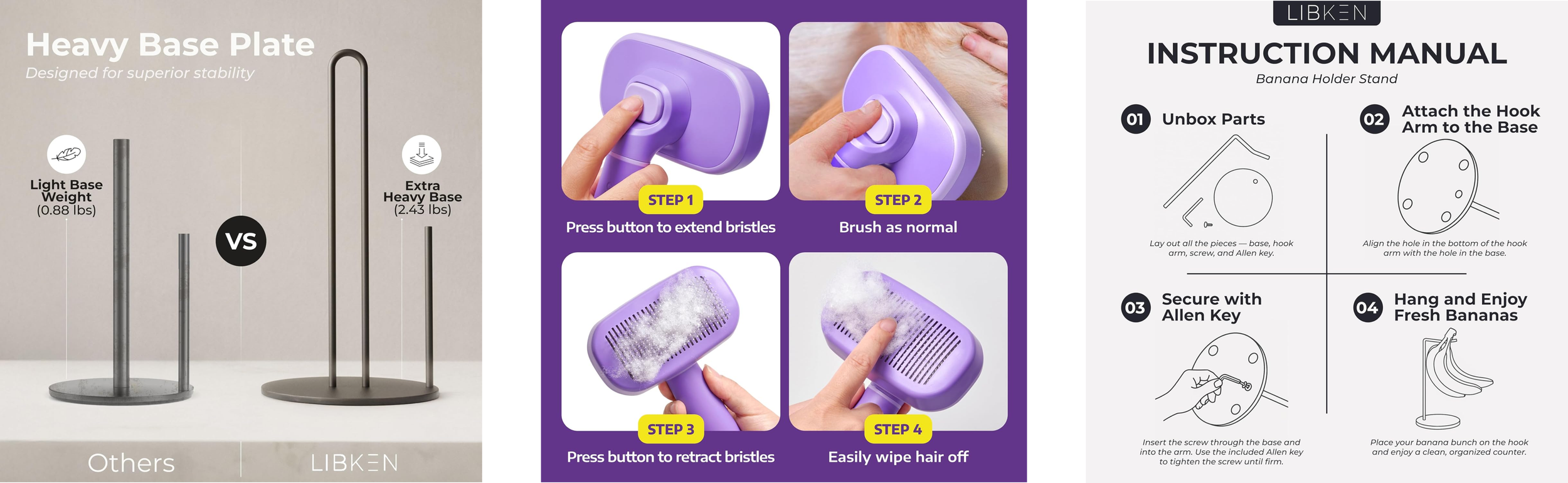
The goal wasn't to design one successful listing. It was to create a system that could reproduce quality at scale.
A repeatable structure for every listing:
The first step was defining the core visual structure of each listing. Every asset had a specific role: presenting the product, showing it in context, explaining dimensions and communicating key benefits.
02 — LIFESTYLE IMAGERY
Show the product in context
I developed guidelines for presenting products in realistic scenarios, helping customers understand their use and key benefits.
01 — MAIN IMAGES
Make the product stand out
I developed principles to make main images more attractive and competitive, capturing attention, highlighting product value and encouraging customers to choose our products directly from search results.
03 — PRODUCT INFOS
Key details easy to understand
Standardised approaches to communicating dimensions, features, benefits and other product-specific information.